Understanding the Role of DC-DC Converters in Power Over Ethernet Solutions

Introduction to Power Over Ethernet (PoE) Solutions and Their Importance
Overview of Power Over Ethernet
Power Over Ethernet (PoE) technology revolutionizes network infrastructure by delivering both data and electrical power through standard Ethernet cables. Engineers and network administrators rely on PoE to simplify deployments in environments like offices, warehouses, and smart buildings. Originally standardized under IEEE 802.3af, PoE evolved into higher-power versions such as 802.3at (PoE+) and 802.3bt (Ultra PoE), supporting up to 90 watts per port. This setup eliminates separate power adapters, reducing clutter and installation complexity. In essence, PoE injects DC power into the Ethernet cable's unused wire pairs, allowing devices to draw power directly from the network switch. For instance, IP surveillance cameras and wireless access points thrive on this seamless integration. As networks expand with IoT devices, PoE ensures reliable power delivery without compromising data speeds. Understanding PoE's foundation helps professionals select compatible components, including essential DC-DC converters, which step down voltages for optimal device operation. This technology underpins modern automation systems, where efficiency and reliability drive performance. PoE's growth reflects the demand for versatile power solutions in Ethernet-based setups, making it indispensable for scalable networks.
Benefits of Utilizing PoE in Modern Networks
Organizations adopt PoE for its unmatched convenience and cost-effectiveness in powering network devices. Installation crews save time by running single Ethernet cables instead of separate power lines, cutting labor costs by up to 50% in large-scale projects. PoE enhances flexibility, enabling remote placement of devices like Wi-Fi access points and VoIP phones without nearby outlets. This scalability supports rapid network expansions, ideal for dynamic environments such as retail spaces or industrial floors. Reliability improves too, as PoE includes built-in detection and protection features that prevent overloads and short circuits. Businesses reduce energy waste through centralized power management from Ethernet switches, aligning with green initiatives. Moreover, PoE future-proofs infrastructure by supporting emerging devices like LED lighting and sensors in smart buildings. In security applications, PoE powers cameras continuously, even during outages if backed by UPS systems. Overall, these advantages boost operational efficiency and lower total ownership costs, making PoE a cornerstone of contemporary networking strategies. Professionals often pair it with DIN rail DC-DC converters for precise voltage control, ensuring devices receive stable power tailored to their needs.
Key Components of PoE Systems
PoE systems rely on interconnected elements that ensure safe and efficient power delivery over Ethernet. At the core sits the Power Sourcing Equipment (PSE), typically Ethernet switches or injectors, which supply DC power at standardized voltages like 48V. Powered Devices (PDs), such as IP phones and wireless routers, connect via Category 5 or higher cables that carry both data and power. These cables must meet PoE specifications to handle the combined load without signal degradation. Midspan injectors bridge legacy networks by adding power to existing data lines. Classification circuits in PDs negotiate power requirements with PSE, preventing mismatches. For advanced setups, DC-DC converters integrate as vital intermediaries, transforming the incoming 48V to lower levels like 5V or 12V for sensitive electronics. Chassis-mounted power supplies often house these converters in industrial PoE applications. Compliance with IEEE standards guarantees interoperability across vendors. Troubleshooting tools, including voltage testers, help maintain system integrity. By assembling these components thoughtfully, engineers create robust PoE networks that power diverse devices, from Wi-Fi access points to automation controllers, with minimal downtime and maximum efficiency.
The Role of DC-DC Converters in Power Over Ethernet
Understanding DC-DC Converters
DC-DC converters transform one DC voltage level to another, playing a pivotal role in optimizing power distribution within PoE ecosystems. These devices, often called DC to DC converters, step up or step down voltages efficiently to match device requirements. In PoE setups, they receive the standard 48V input from Ethernet cables and output precise levels, such as 3.3V for microcontrollers. Engineers favor them for their compact design and high efficiency, often exceeding 90%. Non-isolated variants suit low-power applications, while isolated types provide galvanic separation for safety in noisy environments. Switching-based DC-DC converters dominate due to lower heat generation compared to linear alternatives. Manufacturers offer DIN rail DC-DC converters for easy mounting in control panels, ideal for industrial PoE installations. These power converters handle wide input ranges, ensuring stability amid fluctuations. Understanding their topology—buck, boost, or buck-boost—helps select the right model for specific loads. In PoE, DC-DC converters prevent overvoltage damage to sensitive PDs, enhancing system longevity. As power demands grow, advanced DC-DC converters incorporate protections like overcurrent and thermal shutdown, making them indispensable for reliable Ethernet-powered networks.
How DC-DC Converters Enhance PoE Efficiency
DC-DC converters boost PoE efficiency by minimizing energy loss during voltage conversion, crucial for battery-powered or remote devices. Traditional linear regulators dissipate excess power as heat, but switching DC-DC converters use pulse-width modulation to achieve up to 95% efficiency, reducing operational costs. In PoE systems, they convert 48V to lower voltages without drawing excessive current from the PSE, extending cable lengths up to 100 meters. This efficiency supports high-density deployments, like multiple Wi-Fi access points on a single switch. DIN rail DC-DC converters streamline integration in rack-mounted Ethernet switches, saving space and simplifying maintenance. They also regulate output under varying loads, preventing voltage drops that could disrupt data transmission. For green data centers, efficient DC-DC converters lower cooling needs, aligning with sustainability goals. Advanced models feature soft-start capabilities to ease inrush currents, protecting PoE infrastructure. By enabling precise power allocation, these converters maximize the utility of PoE's 90W limit in Ultra PoE standards. Network designers leverage them to optimize performance, ensuring seamless operation across diverse applications from surveillance to industrial automation.
Common Applications of DC-DC Converters in PoE
DC-DC converters find widespread use in PoE applications, powering everything from security cameras to networked sensors. In video surveillance, they step down 48V PoE to 12V for camera modules, enabling outdoor installations without local transformers. VoIP phones benefit from compact DC-DC converters that provide stable 5V for audio circuits, ensuring clear calls over Ethernet. Wireless access points use them to supply power to radio components, supporting high-speed Wi-Fi in offices. Industrial automation relies on DIN rail DC-DC converters mounted in control cabinets, converting PoE for PLCs and motors. Point-of-sale systems in retail draw regulated power for displays and processors via these converters. In smart lighting, PoE delivers power to LED drivers through DC to DC converters, allowing centralized control. Healthcare facilities employ them in patient monitoring devices for reliable, isolated power. Even in transportation, like railway signaling, rugged DC-DC converters handle PoE in harsh conditions. Their versatility stems from customizable outputs and protections, making them essential for expanding PoE ecosystems. As IoT proliferates, demand for specialized DC-DC converters in PoE grows, driving innovations in efficiency and form factors.
Types of DC-DC Converters: Focus on Din Rail Variations
Compact Din Rail DC-DC Converters
Compact DIN rail DC-DC converters deliver powerful performance in tight spaces, ideal for PoE systems in control panels. These units, often under 100mm wide, mount securely on standard 35mm DIN rails, facilitating quick setups in industrial Ethernet switches. They handle inputs from 9V to 75V, perfectly suiting 48V PoE sources, and output multiple rails like 5V and 24V for diverse devices. High-efficiency switching topologies minimize heat, allowing dense installations without extra cooling. Users appreciate their plug-and-play design, with screw terminals for easy wiring to PoE injectors. In automation cabinets, compact DIN rail DC-DC converters power sensors and actuators over Ethernet, enhancing reliability. Related searches for compact DIN rail DC DC converters highlight their popularity for space-constrained applications like vending machines and access controls. These power converters boast wide temperature ranges, from -40°C to 85°C, ensuring operation in extreme environments. Protections against surges and shorts safeguard PoE networks. As demand rises, manufacturers innovate with slimmer profiles, integrating EMI filters for cleaner signals. Engineers select them for their balance of size, power, and cost, making compact DIN rail DC-DC converters a go-to for modern PoE deployments.
Low Profile and Miniature Din Rail Converters
Low profile and miniature DIN rail converters push boundaries in size reduction while maintaining robust PoE compatibility. These DC-DC converters, as thin as 15mm, fit into shallow enclosures or behind panels in Ethernet switch chassis. Miniature variants excel in mobile PoE applications, like temporary Wi-Fi setups, delivering up to 20W from 48V inputs. Their low-profile design reduces shadowing on rails, allowing more modules per DIN strip. Switching regulators inside ensure over 90% efficiency, critical for power-sensitive PDs. Installers favor them for retrofits in legacy systems, where space limits traditional units. Searches for low profile DIN rail DC DC converters and miniature DIN rail DC DC converters underscore their role in compact automation panels. These converters support isolated outputs for noise-prone environments, protecting data integrity in PoE cables. With adjustable voltages via trimmers, they adapt to varying device needs, from 3.3V for IoT nodes to 15V for drives. Durability features include conformal coating for humidity resistance. In evolving networks, low profile and miniature DIN rail converters enable innovative designs, such as edge computing powered by PoE, without sacrificing performance or safety.
Comparison of Din Rail Converter Modules
Comparing DIN rail converter modules reveals trade-offs in power, size, and features tailored to PoE needs. Standard modules offer 50W output in a 100mm footprint, while premium ones hit 100W with active cooling for high-load Ethernet switches. Compact models prioritize space savings but may limit current to 5A, suiting light PDs like sensors. Efficiency varies: basic linear types waste energy, but switching DIN rail DC-DC converters achieve 95%, ideal for continuous PoE operation. Cost-wise, entry-level converters for DIN rail start at $20, escalating for isolated or wide-input variants. Miniature modules shine in portability but lack expandability compared to modular stacks. Users compare DIN rail converter modules based on MTBF ratings, often exceeding 1 million hours for industrial grades. Integration ease differs; some include DIN rail DC to DC converters with built-in fuses, others require add-ons. In PoE contexts, modules supporting 48V to multi-output configurations outperform singles for complex setups like Wi-Fi arrays. Environmental specs, such as IP ratings, influence choices for outdoor use. Ultimately, selecting the best DIN rail converter variations depends on balancing PoE demands with installation constraints, ensuring optimal system performance.
Technical Specifications and Standards for Din Rail DC-DC Converters
Voltage Requirements: 48V and Beyond
DIN rail DC-DC converters meet stringent voltage requirements, starting with the 48V standard in PoE systems for reliable power delivery. These converters accept inputs from 36V to 75V, accommodating PoE's nominal 48V while tolerating spikes up to 57V. Outputs range from 3.3V to 48V, enabling step-down for low-voltage devices like microprocessors in Ethernet-connected PCs. Beyond 48V, advanced models handle 110V DC for hybrid AC-DC setups, bridging traditional power supplies with PoE. DIN rail voltage converters ensure tight regulation, within 1% tolerance, to prevent jitter in data transmission. High-voltage variants support Ultra PoE's 54V, powering demanding PDs like PTZ cameras. Engineers specify DIN rail step up converters for boosting low battery voltages to PoE levels in remote sensors. Compliance with UL and CE standards guarantees safety in 48V and beyond applications. Wide-range inputs reduce the need for multiple converter types, streamlining inventory. In practice, these specs allow DIN rail DC converters to thrive in volatile environments, from solar-powered networks to industrial grids, delivering stable DC power over Ethernet without interruptions.
Switching Regulators vs. Linear Regulators
Switching regulators outperform linear regulators in DIN rail DC-DC converters, especially for PoE's efficiency demands. Switching types use inductors and capacitors to chop DC input at high frequencies, converting 48V to lower outputs with minimal loss—often 85-95% efficient. Linear regulators, by contrast, drop excess voltage across a transistor, generating heat and capping efficiency at 50% for high steps. In PoE setups, switching DIN rail DC DC converters prevent thermal overload in enclosed chassis, extending component life. They produce ripple under 50mV, crucial for sensitive analog circuits in Wi-Fi modules. Linear options suit ultra-low noise needs, like audio over Ethernet, but require heatsinks, adding bulk. Cost favors switching for volumes over 10W, with ICs like those from Texas Instruments enabling compact designs. DIN rail DC DC power converters leverage switching for multi-output rails, powering multiple PDs efficiently. Noise mitigation via filters makes switching viable even in EMI-sensitive areas. As PoE evolves, switching regulators dominate DIN rail implementations, driving innovations in power density and reducing energy bills in large networks.
Integration of DC-DC Converters into Chassis and PCBs
Integrating DC-DC converters into chassis and PCBs enhances PoE system modularity and performance. In chassis designs, DIN rail DC-DC converters snap onto mounting rails within metal enclosures, providing centralized power for Ethernet switches and PDs. This setup simplifies wiring, with outputs routed to PCBs via bus bars for even distribution. On PCBs, surface-mount DC to DC converters occupy minimal space, embedding directly into device boards for compact PoE endpoints like access points. Thermal management involves vias and pads to dissipate heat from switching regulators. Chassis integration often includes DIN rail power converters with pluggable terminals, easing field upgrades. For high-reliability, isolated DC-DC converters prevent ground loops between PoE and PCB circuits. Standards like IPC-2221 guide PCB layout to minimize noise coupling. In automation, chassis house multiple DIN rail DC DC converters, feeding power supply units to controllers. Miniature variants fit edge PCBs in IoT devices, supporting PoE's plug-and-play ethos. Successful integration demands consideration of EMI shielding and voltage derating, ensuring robust operation across temperatures. This approach streamlines PoE deployments, from rack-mounted switches to distributed sensors.
Future Trends in Power Supply Solutions and Automation
Emerging Technologies in Power Conversion
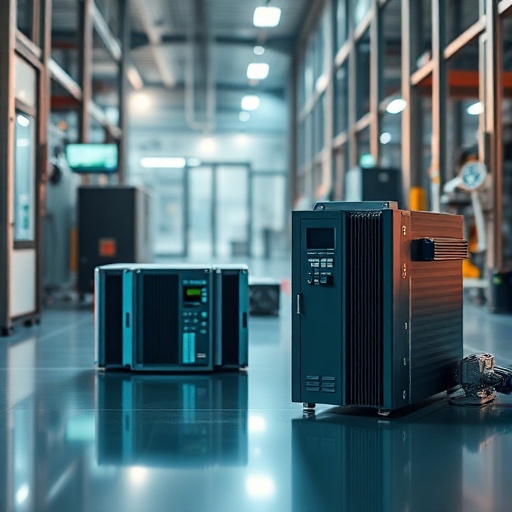
Emerging technologies reshape power conversion, with wide-bandgap semiconductors like GaN and SiC revolutionizing DC-DC converters for PoE. These materials enable higher switching frequencies, shrinking DIN rail DC-DC converters while boosting efficiency beyond 98%. Digital control loops in next-gen converters allow real-time adjustments via software, optimizing power for variable PoE loads. Resonant topologies reduce losses in 48V to low-voltage steps, ideal for dense Ethernet networks. Integration of AI predicts failures in power supplies, enhancing uptime in automation. Searches for DIN rail electricity converters highlight interest in bidirectional models, supporting energy harvesting in IoE setups. USB-PD compatibility extends PoE's reach to consumer devices, with DC DC DIN rail converters adapting voltages on-the-fly. Quantum dot cooling promises heat-free operation, compacting designs further. As 5G merges with PoE, ultra-fast converters handle pulsed powers for base stations. Sustainability drives recyclable materials in power converter builds. These advancements position DC to DC converters at the forefront of efficient, intelligent power solutions, powering the next wave of connected automation.
The Impact of Wi-Fi and Ethernet Switches on Power Supply Design
Wi-Fi advancements and Ethernet switches profoundly influence power supply design, demanding versatile DC-DC converters in PoE architectures. Wi-Fi 6 and 7 require stable 12V feeds for multi-radio antennas, pushing DIN rail DC-DC converters to deliver higher currents without voltage sag. Ethernet switches, as PSE hubs, integrate onboard DC DC power converters to manage multi-port PoE outputs efficiently. This consolidation reduces external components, streamlining chassis designs for data centers. High-speed switches generate more heat, necessitating low-profile DIN rail converters with enhanced thermal paths. PoE++ standards up the ante, with switches sourcing 90W per port, requiring robust DC converters for downstream regulation. Wi-Fi mesh networks amplify power needs, favoring modular DIN rail converter modules for scalable supplies. Designers incorporate power monitoring in switches to dynamically allocate from DC-DC converters, optimizing for traffic peaks. Edge switches in automation benefit from rugged converters handling vibrations. Overall, these technologies drive slimmer, smarter power supplies, ensuring Ethernet and Wi-Fi ecosystems evolve with reliable, high-efficiency PoE integration.
Challenges and Innovations in Din Rail DC-DC Converters
DIN rail DC-DC converters face challenges like thermal management and miniaturization, yet innovations address them head-on for PoE applications. Heat buildup in dense panels limits power density, but liquid-cooled hybrids and graphene heatsinks dissipate it effectively. EMI compliance grows tougher with faster switching, countered by integrated shields in new DIN rail DC to DC converters. Supply chain disruptions spur domestic manufacturing of components for these power converters for DIN rail. Innovations include stackable modules that expand outputs without extra rails, suiting growing PoE networks. Cybersecurity threats to smart converters prompt encrypted firmware updates. Challenges in wide-voltage tolerance for unstable grids inspire adaptive algorithms in DC DC converters for rail. Low-profile designs struggle with connector reliability, solved by spring-loaded terminals. For automation, vibration-resistant mounts enhance durability in mobile setups. Cost pressures drive 3D-printed enclosures for custom DIN rail variations. These solutions propel DIN rail DC DC converters forward, overcoming hurdles to deliver cutting-edge performance in Ethernet-powered futures, from industrial floors to smart cities.
See Also
- Maximize Efficiency with Compact Din Rail DC-DC Converters for Modern Automation
- The Future of Power Supplies How Din Rail DC-DC Converters are Revolutionizing Connectivity
- Unlocking the Power of 48V Systems with Din Rail DC-DC Converters
- Exploring the Versatility of Din Rail DC-DC Converters for Industrial Applications